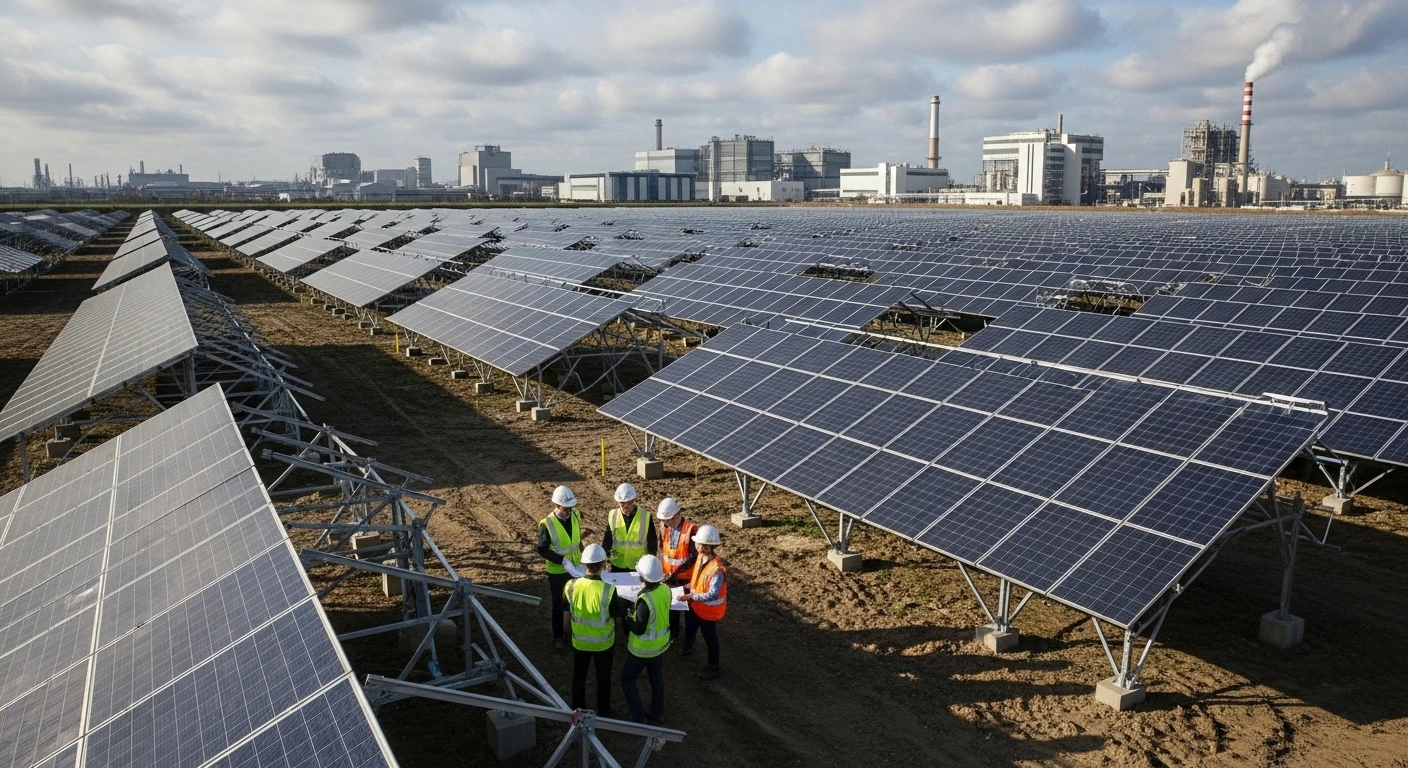

India’s solar module manufacturing capacity has reached a historic milestone in 2025, climbing to 74 GW — nearly double the 38 GW recorded in 2024. This rapid expansion reflects not only the country’s commitment to renewable energy but also its growing technical and industrial capabilities. For project developers, investors, and engineers, understanding these shifts is essential for planning reliable and cost-effective solar projects.
Technical Drivers Behind India’s Solar Module Manufacturing Capacity
The surge in India’s solar module manufacturing capacity is fueled by strategic policy measures and industrial investment. The Production Linked Incentive (PLI) scheme has attracted over $4.8 billion, accelerating domestic manufacturing while creating thousands of skilled jobs.
Additionally, the commissioning of India’s first ingot-wafer facility with 2 GW capacity marks a significant step in building a complete solar supply chain domestically. Higher-quality wafers and advanced cell architectures now allow for greater module efficiency and predictable energy yields, which is critical for both utility-scale and rooftop solar projects.
Rooftop Solar and India’s Solar Module Capacity Growth
Residential adoption is also reshaping India’s solar landscape. Under the PM Surya Ghar Muft Bijli Yojana, more than 1.1 million households have installed rooftop solar systems, supported by approximately $653 million in subsidies.
This decentralization not only empowers households but also reduces grid load and strengthens energy security in urban and semi-urban areas. For businesses exploring corporate rooftop solar or hybrid solutions, these trends indicate policy stability and a growing ecosystem of qualified suppliers.
India’s Solar Module Manufacturing Capacity on the Global Stage
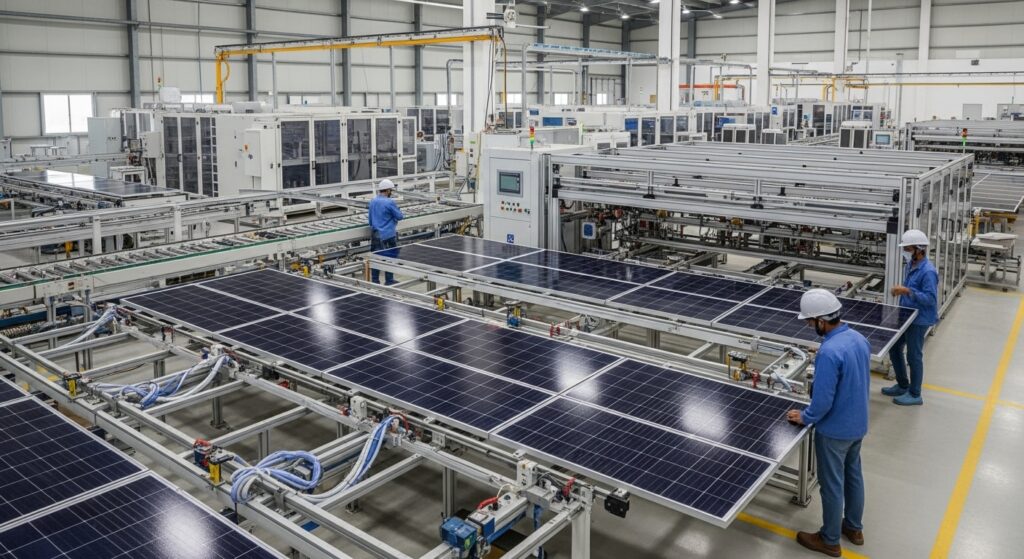
With 74 GW of module capacity and 25 GW of solar cell production, India is emerging as a global contender in renewable energy manufacturing. Consistent policy support, cost competitiveness, and expanding domestic supply chains position the country among the top three solar manufacturing nations worldwide.
Union Minister Prahlad Joshi noted that these developments are a testament to India’s renewable energy vision, signaling long-term growth and energy independence.
Implications for Project Developers and Investors
The growth in India’s solar module manufacturing capacity carries multiple strategic advantages:
- Supply predictability: Reduced delays due to domestic manufacturing scale.
- Cost optimization: Less reliance on imports may stabilize module pricing.
- Innovation potential: Access to advanced modules enables high-efficiency project designs.
Organizations can leverage these trends with end-to-end solar solutions offered by REnergo Developers. For insights on practical project implementation and trends, you can also explore our solar project analysis blog.
Conclusion: A Technical and Strategic Milestone
India’s growth in solar module capacity is more than a statistic — it represents a technological, industrial, and strategic milestone. Rapid module scale-up, increasing rooftop adoption, and strengthened supply chains signal a maturing solar ecosystem.
For businesses and institutions seeking reliable, cost-efficient solar solutions, partnering with experts like REnergo Developers ensures access to high-performance systems aligned with India’s renewable energy goals.
As India progresses toward its 500 GW non-fossil energy target by 2030, the developments in 2025 set the foundation for a robust and sustainable energy future.